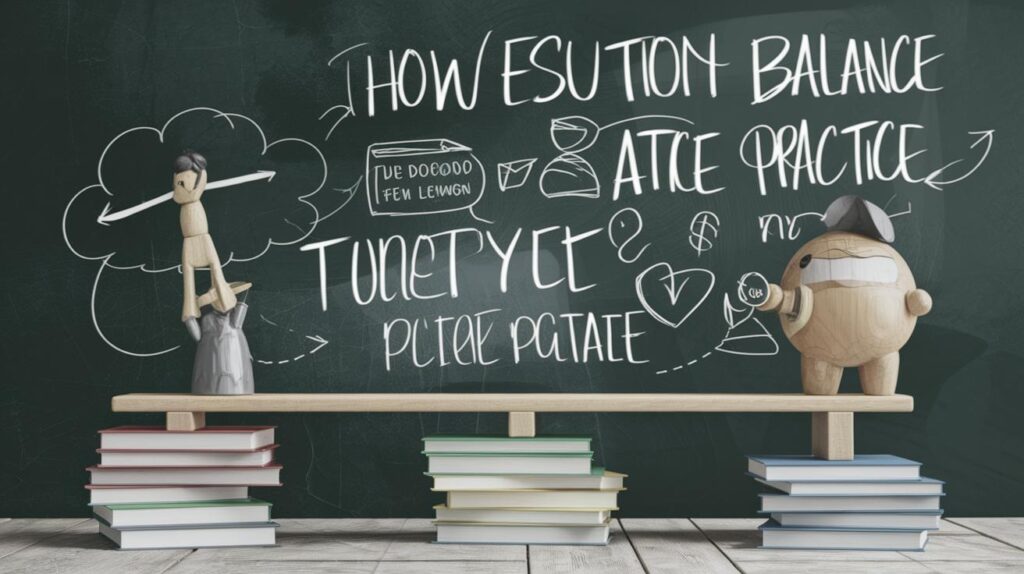
Balancing Theory and Practice in Education
Introduction
In the realm of education, striking a balance between theoretical knowledge and practical application is an ongoing challenge. This article delves into critical considerations for educators and students alike. It begins by distinguishing between what is ‘true’ in an academic sense and what is ‘useful’ in real-world scenarios. We then explore the pursuit of knowledge that is both truthful and practical. From there, we journey into the complexities of education systems and how they can be navigated by embracing diverse learning experiences. Lastly, the role of the practitioner as the ultimate decision maker in applying theory to practice is examined. Through these themes, we aim to provide a comprehensive understanding of how to balance learning effectively and meaningfully.
Distinguishing between What is ‘True’ and What is ‘Useful’
In educational contexts, distinguishing between what is ‘true’ and what is ‘useful’ can sometimes be a formidable task. ‘True’ often aligns with established theoretical frameworks, scientific facts, or academic research. These provide the foundation upon which many educational systems rest. However, truth in education is not always absolute; it is often nuanced and subject to reinterpretation as knowledge evolves.
Conversely, what is ‘useful’ pertains to the practical application of knowledge. It is the ability to translate theoretical insights into skills and competencies that can be applied in real-world situations. While what is true forms the roots of understanding, usefulness enables learners to tackle immediate challenges effectively. Therefore, education systems must strive to present information that holds both theoretical integrity and practical value, equipping students with knowledge that empowers them to act decisively in diverse scenarios.
The Pursuit of Truth and Usefulness
The pursuit of truth and usefulness in education requires a commitment to both depth and breadth of understanding. Truthful knowledge ensures accuracy, providing learners with reliable information to base their further learning. This pursuit involves critical engagement with subject matter, an exploration of diverse perspectives, and the encouragement of inquisitiveness. Ensuring the credibility and rigor of educational content is paramount.
Simultaneously, the pursuit of usefulness entails the integration of practical experiences. Educational institutions increasingly recognize the importance of internships, project-based learning, and real-world problem solving, which bridge the gap between theoretical study and practice. By fostering environments where students apply their learning, educators help cultivate adaptability, creativity, and a readiness to face complexities outside academic environments. The synthesis of truth and usefulness in educational pursuits thus fosters well-rounded individuals capable of contributing meaningfully to society.
Accepting, Embracing, and Navigating Complexity
Education is an inherently complex field, encompassing various disciplines, methodologies, and pedagogical strategies. Accepting complexity involves recognizing that learning is not a linear process; it requires adaptability and openness to multifaceted approaches. Embracing complexity equips educators and learners to deal with ambiguity and change while nurturing a growth mindset.
Navigating this complexity requires innovative strategies and tools to facilitate learning across diverse contexts. Technological advancements, such as online learning platforms and digital resources, provide rich opportunities to explore complex subjects interactively. These tools are invaluable for enhancing theoretical understanding and offering simulations for practical application. The goal is to create an adaptive learning environment where theory and practice coalesce seamlessly, allowing learners to gain holistic insights into their areas of study.
The Practitioner as the Decision Maker
Ultimately, it is the practitioner—the student or educator—who acts as the decision maker in balancing theory and practice in their educational journey. Practitioners develop the skills to discern how and when knowledge should be applied. This decision-making process involves evaluating contexts and gaining insights from both successes and failures.
Educators play a crucial role in empowering students to become decisive practitioners. They can foster critical thinking and reflection, thus enabling learners to internalize and contextualize knowledge. When students are encouraged to make informed decisions, they grow into professionals who contribute effectively within their fields, offering innovative solutions and driving change. The practitioner, armed with the right balance of theory and practice, becomes a pivotal force in shaping the future of industries and communities.
Summary of Main Points
| Theme | Key Insights |
|---|---|
| Distinguishing between What is ‘True’ and What is ‘Useful’ | Balancing theoretical frameworks with practical applications helps form a robust educational foundation. |
| The Pursuit of Truth and Usefulness | Combining depth of truthful knowledge with the breadth of practical experience prepares learners for real-life challenges. |
| Accepting, Embracing, and Navigating Complexity | Education thrives in an environment that accepts complexity by utilizing diverse learning methodologies and advancing technology. |
| The Practitioner as the Decision Maker | Ultimately, educators and students need to develop decision-making skills to apply theoretical learning in practical contexts effectively. |